
Poverty vs. Abandonment
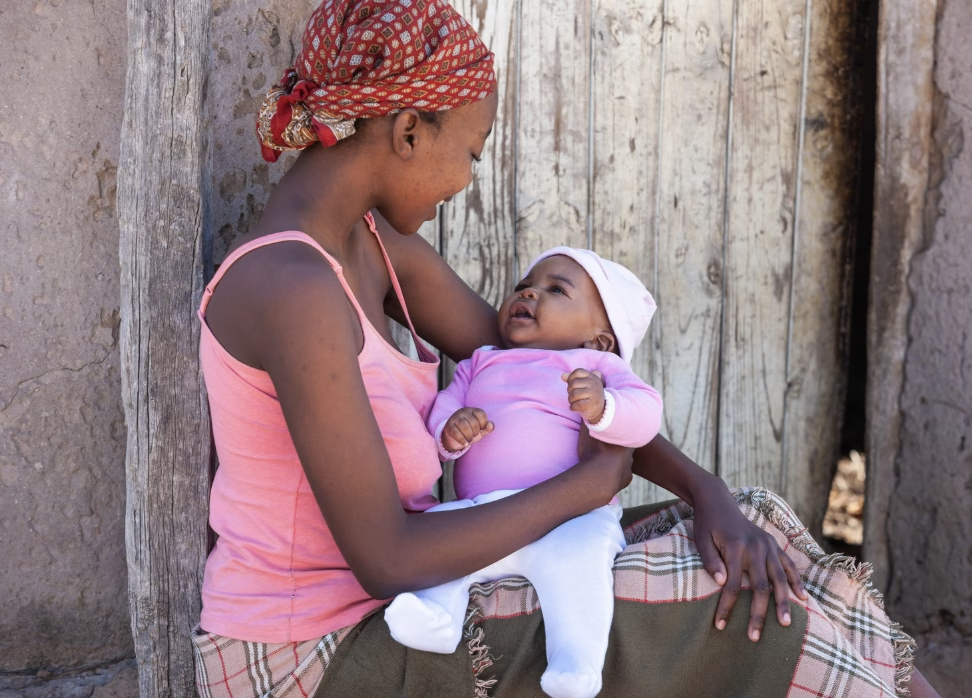
It’s easy to assume that when a child is alone, they must not have a family.
But that’s often not the full story.
MOST CHILDREN HAVE FAMILY
Many children who enter care do have family somewhere—parents, relatives, extended connections.
What’s often missing isn’t relationship.
It’s stability.
Poverty, crisis, and lack of support can push families to a breaking point. And in some cases, that leads to abandonment.
ABANDONMENT HAPPENS – But It’s Not the end of the Story
There are real situations where children are left behind.
Sometimes suddenly.
Sometimes in unsafe or heartbreaking ways.
But even in those cases, abandonment is often connected to deeper hardship—fear, lack of resources, isolation, or crisis.
At HCO, we don’t stop at the moment a child is found alone.
We ask:
Who is this child connected to?
Where did they come from?
Is there family that can be found, engaged, and supported?
Because abandonment doesn’t always mean there is no one.
It often means something broke.
Working Within Poverty to Change the Outcome
Our work is not just to care for a child.
It’s to step into the space between crisis and permanence—and change what happens next.
That looks like:
- Tracing family members, even when it takes time
- Having hard, honest conversations with parents and relatives
- Helping shift the response from “I can’t do this” to “what would it take to try?”
- Identifying safe family members who can step in
- Supporting those families so the child can go home and stay home
This is slow, intentional work.
It’s not about ignoring abandonment.
It’s about addressing what led to it—and working toward something different.
Replacing Abandonment with Family
When families are given support, perspective, and practical help, outcomes can change.
A child who was left can be reclaimed.
A relative who felt unable can step forward.
A situation that felt final can become temporary.
This is the purpose behind what we do.
Not long-term separation.
Not assuming there is no family.
But doing the work—patiently and consistently—to move children out of abandonment and back into relationship whenever possible.
Because even when the start is hard, the goal is the same: Family.