
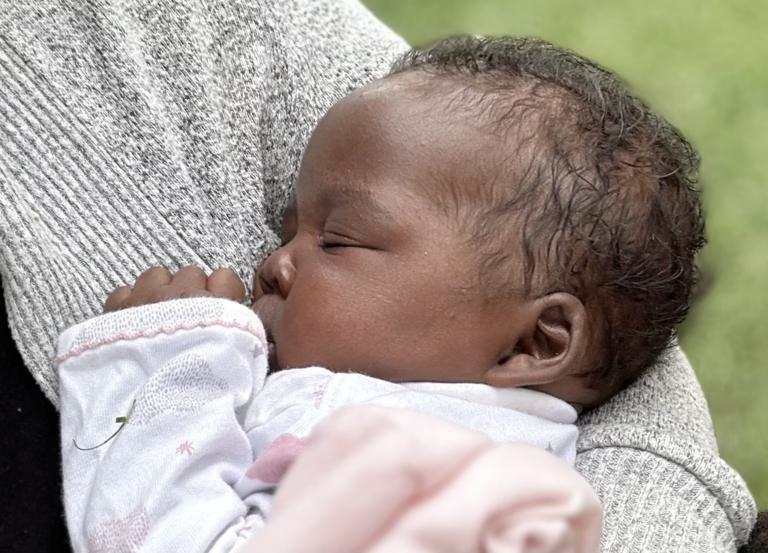
When a very young child goes through something difficult, a common reassurance follows:
“They won’t remember anyway.”
It sounds comforting.
It sounds merciful.
But it depends on what we mean by remember.
We usually think of memory as stories — moments we can describe later. First birthdays, first homes, certain places. Babies don’t keep memories that way.
They remember with their bodies. (Adults do too, by the way.)
Before children have words or images, their brains are already organizing experience. Every response to a cry — or lack of response — teaches the nervous system what to expect from the world.
Not as a thought.
But as a pattern.
Over time a child learns:
When I’m distressed, does someone come?
When I’m hungry, am I fed?
When I’m afraid, am I held?
A baby may not recall a specific day, but they carry the conclusion of those days. It’s “in there” somewhere.
This is why early care matters so much.
Consistent response teaches the body to settle. Sleep deepens. Curiosity grows. Connection feels safe.
Unpredictable care teaches something different. Not always because someone meant harm — but because the child had to prepare for uncertainty, unpredictability.
Later in life, a child cannot explain why certain situations feel easy or overwhelming, scary or calming.
But their nervous system remembers what their mind cannot.
This is also why transition moments matter.
When babies come to us, our work is not only feeding and protecting them today. It is helping their bodies learn that needs are met and people return — so they can attach to a family tomorrow.
We cannot erase every early hardship, but we can shape what their expectations become next.
Distress → comfort
Need → response
Fear → presence
Trust grows from experiences the child will never consciously recall — yet will live out every day.
So when people say, “they won’t remember,” they are partly right.
They won’t remember the events.
They will remember what those events taught them about people. And we hope to be the people that set their course of memories on a healing path.